In today’s fast-moving world, hygiene is no longer a luxury—it’s an expectation. From corporate offices and malls to hospitals and airports, washrooms play a silent yet powerful role in shaping user experience. This is where washroom automation steps in as a game-changer.
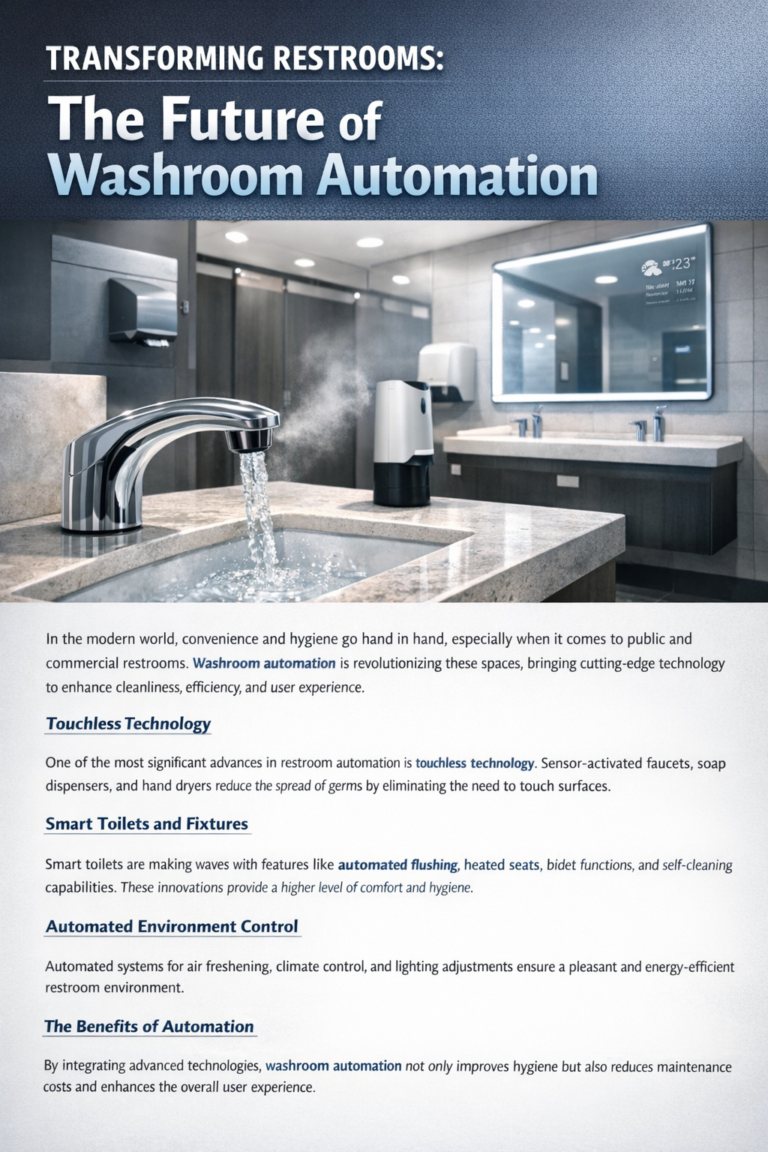
Washroom automation uses sensor-based and touch-free technologies to manage essential functions like water flow, flushing, soap dispensing, and hand drying. The result? Cleaner spaces, reduced wastage, and a modern, premium experience for every user.
What Is Washroom Automation?
Washroom automation refers to the integration of smart devices and sensors that operate without physical contact. These systems automatically respond to human presence or movement, ensuring optimal hygiene and efficient resource usage.
Common automated washroom solutions include:
- Sensor-based faucets
- Automatic flush systems
- Touch-free soap dispensers
- Automated hand dryers
- Smart urinal controls
- Odour control and lighting automation
Each component works together to create a seamless, user-friendly washroom environment.
Why Washroom Automation Matters Today
1. Enhanced Hygiene
Touch-free systems significantly reduce the spread of germs and bacteria. Since users don’t need to touch taps, flush handles, or dispensers, the risk of cross-contamination drops dramatically.
2. Water & Energy Conservation
Automated faucets and flush systems release only the required amount of water. This prevents overuse, leakage, and human error—making washrooms eco-friendly and cost-effective.
3. Modern User Experience
A smart washroom reflects professionalism and care. Whether it’s a corporate office or a luxury hotel, automation adds a premium feel that users instantly notice.
4. Reduced Maintenance Costs
Automated systems minimize water wastage, overflow issues, and manual wear and tear. This leads to fewer breakdowns and lower long-term maintenance expenses.
Key Applications of Washroom Automation
Washroom automation is not limited to one sector. It is widely adopted across:
- Corporate offices – for hygiene and brand image
- Hospitals & clinics – to maintain sterile environments
- Shopping malls – to manage heavy footfall efficiently
- Airports & railway stations – for high-traffic, low-maintenance usage
- Hotels & restaurants – to elevate guest experience
- Educational institutions – for durability and water savings
How Washroom Automation Supports Sustainability
Sustainability is a global priority, and automated washrooms contribute directly to it. By controlling water flow, optimizing flush volumes, and reducing electricity usage, these systems help organizations lower their environmental footprint.
Less water wasted means:
- Lower utility bills
- Reduced pressure on natural resources
- Compliance with green building standards
Automation turns everyday washroom usage into a responsible, eco-conscious practice.
The Future of Smart Washrooms
The future of washroom automation goes beyond basic sensors. Smart washrooms are now evolving with:
- IoT-enabled monitoring systems
- Real-time usage analytics
- Predictive maintenance alerts
- Smart dashboards for facility managers
These advancements allow businesses to monitor performance, detect issues early, and ensure uninterrupted hygiene standards.
Final Thoughts
Washroom automation is not just about technology—it’s about health, efficiency, and responsibility. As expectations around cleanliness and sustainability continue to rise, automated washrooms are quickly becoming the new standard.
Upgrading to washroom automation is an investment in better hygiene, smarter resource management, and a future-ready infrastructure. In a world where first impressions matter, a smart washroom speaks volumes—without saying a word.
About the Author